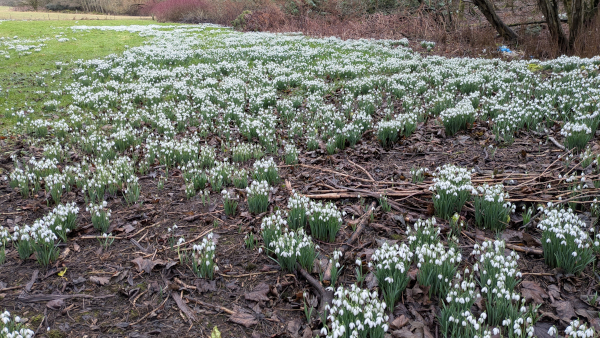
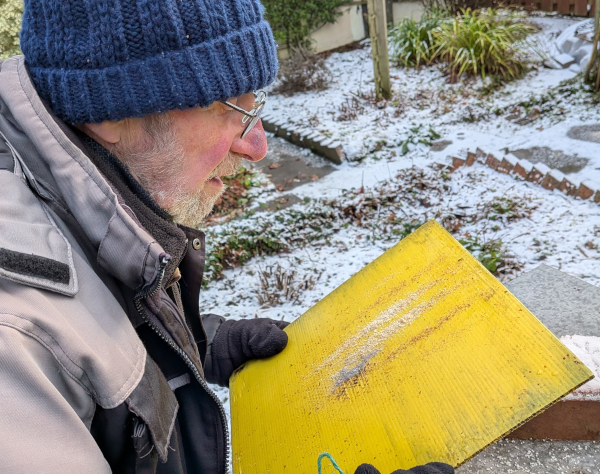
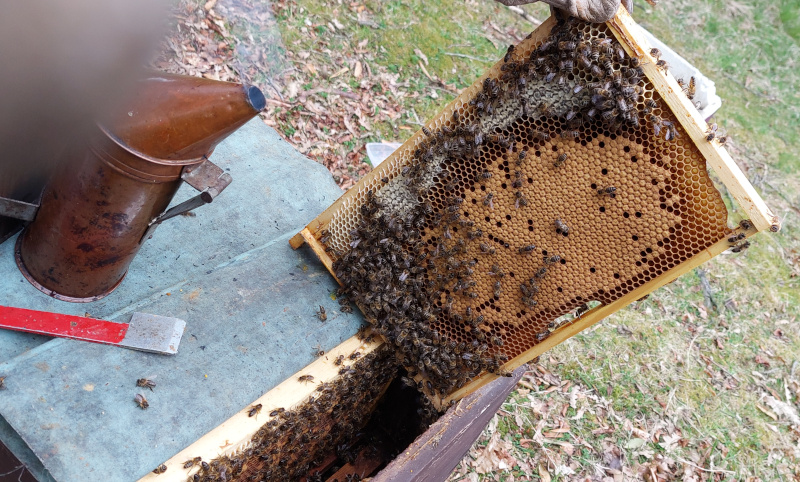
Predictably the colonies that were strongest at the end of autumn are sound and starting to bring in early pollen from snowdrop, crocus, and hazel. These are important sources of protein for early brood build up and are a sure sign of a stirring queen. Floor debris confirms the presence and position of brood by the linear biscuit coloured capping traces. Happily no varroa was detected.
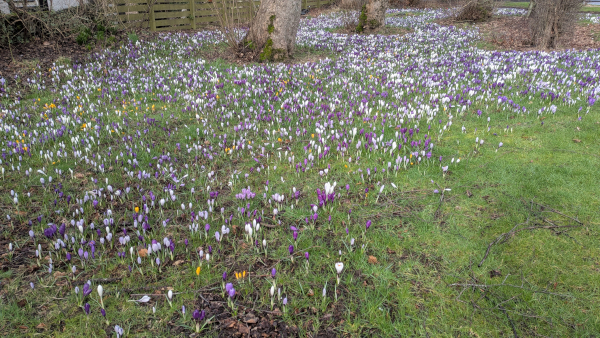
A carpet of crocus flowers signalling winter that its time to go! Lots of pollen to be had here, but the suns needs to be out.
Also predictable was the loss of the last two weak colonies which when opened revealed very few bees and no trace of brood production. The few remaining bees were all shiny black indicating that they are old bees and not recently emerged. The queen may have failed but more likely the lack of numbers has resulted in nest temperatures dropping too low for brood production. It takes a strong colony to withstand the natural loss of older bees and bees on the outer edge of the cluster while maintaining a core temperature sufficient for protecting the queen, egg laying and brood production. They were expected losses that could really have been avoided by uniting before winter.


Bell heather is in full flower and the bees won't miss the opportunity of a little early pollen and nectar.
The bees were all up, meaning they were visibly up on top of the brood frames currently surviving on what is in the fondant feeders. All were all topped up and re-positioned to directly above the bees using floor debris as an aid to their location. It won't be long before nectar starts to flow in sufficient quantity to justify supers!